Summer herfing!

I can hardly believe it is July. That is half the year gone already. What a crazy six months. I do sense that we are returning to something like normality with the lifting of Lockdown, in three weeks.

I hope you have made the best of 2021 to date. Personally, I am settling into a nice routine of herfing with friends at C.Gars – St James’s during the week. With some of the recent, good weather, the outside-seating area has been a delight and will continue to be so in the weeks ahead when the sun hopefully shines on us.

My St James’s premises showcases the finest of our cigar and spirits range. The fabulous team on hand there (Sam, Dante and Viktoria) mix some very tasty cocktails. You are assured the warmest of welcomes, as well as helpful, friendly advice.

Not far from St. James’s in Shepherd’s Market, Turmeaus – Mayfair is, finally, fully open again for cigar and whisky sampling. You do have to book a slot as this ever-popular location is jammed full, morning till night. Christian, the store manager and our resident pipe expert, is delighted at the return to normal, and being fully open again.

I’m happy to report from the north west that the Puffin Rooms there and Late Hour Turmeaus – Liverpool have finally re-opened, as well. Like Mayfair, bookings are essential as both the cigar-sampling lounge and the jazz/tapas venue are jam-packed, booked-out, every night of the week. There is no experience quite like the Puffin Rooms. The widest whisky range in that part of the country, delicious, tapas-style food, signature cocktails, and the best of live jazz music, seven nights a week. We refurbished the venue during Lockdown to maintain the Five-Star standards. I am very pleased with the results and look forward to you enjoying some of the comforts we have added.

Now it feels safe to do so, our other sampling lounges, in Liverpool, Chester and Knutsford, are slowly re-opening. We look forward to welcoming back friends at all our venues.

As always, we are striving to ensure that all your favourites are to hand when you do join us. Guaranteeing this is currently a challenge. Maintaining Havana stocks of the most popular lines remains a test, not least the Cohiba range. To offset this, as needs be in the weeks and months ahead, we will be releasing our reserve holdings. Please be aware that we have just released small quantities of:

Ramon Alones No.2 Limited Edition 2019

Montecristo Supremos Limited Edition 2019 

H Upmann Sir Winston

Cohiba Esplendidos

Juan Lopez Seleccion Superba UK Regional Edition 2016

Supplies of the Mitchellero brand of Nicaraguan cigars should be in abundance by the middle of this month. The success of this release took us by surprise. A great range of value smokes that have proved popular beyond belief. If all goes to plan, we have a huge shipment of another 100,000 cigars arriving around the middle of July.

If you are seeking something with added heritage, our Summer Vintage cigar auction will be held on July 27th. The catalogue will be online a week before then (July 20th) after which we will be taking bids. The sale is HUGE!  Around 500 Lots of cigars and 100 Lots of rare whisky and spirits. Sections include Vintage, Pre Embargo, Mature, Limited Edition, and Davidoff, as well as Limited-Edition Humidors. Please be aware, you have to register to bid. My Auction Team are online, round the clock, to assist and advise.

As for our whiskies, the Stalla Dhu single malt whisky continues to collect International awards. We recently bottled a stunning cask of Glen Elgin Port Wood that is a sublime tasting experience, especially with a good, premium cigar. My partner, Ron, suggested trying the Glen Elgin with a large block of ice, which changes the flavour characteristic diametrically. I highly recommended that you give this a go.

If you enjoy a rum with your cigar you simply have to try Aged Key West Raw and Key West Bad Bitch.  This is a small-batch production of the highest quality that pairs to perfection.

Looking a little further ahead, this quarter we are planning to release the new UK regional edition Havana as well as the next Davidoff – Orchant Seleccion, which is a Toro. All this is exciting stuff.

At the same time, a last call for my splendid Plasencia – Orchant Seleccion Telica.  This incredible blend from Nestor Plasencia that provides volumes of sweet flavour, balanced with medium strength is almost sold out now. If you do sadly miss out, I’m looking forward to introducing our next Plasencia-Orchant Seleccion – a Lanceros – later this year.

Though we are inching back to normality, we are still running our virtual-tasting events. That will be the case until we can switch back to all our sampling lounges. Do please join me for some memorable evenings ahead with some of the best brand ambassadors there are.

My current favourite smokes include:

Hoyo de Monterrey Escogidos (exclusive La Casa del Habano line)

Hoyo de Monterrey Elegantes (exclusive La Casa del Habano line)

Alec Bradley – Orchant Seleccion Shorty

Regius Gran Toro

Inca – Secret Blend Reserva D’Oro robusto

For you, different flavours and sizes for all occasions.

Have a smokey weekend.

Peaceful puffing

Mitchell

GBD Pipes

Welcome back.

I hope you are ready because today we are going back to France. The history of these brands is long, but I will try to make it short and straightforward.

It’s the 1850s, and three gentlemen decided to establish a new business dedicated to Meerschaum Pipes. Gannieval, Bondier, and Donninger founded “GBD.” All three had experience making pipes, Ganneval with wooden pipes, Bondier clay and china pipes, and Donninger Meerschaum pipes. Even if the company owners frequently changed, the GBD name remained well-established in the market. August Marechal and Ferdinand Ruchon led the firm into the 20th century. They were in charge of the company for more than 50 years. Not much is known about their first production, but we know that GBD offered Meerschaum pipes in many different shapes that reminded of bent pipes derived from clay pipes such as Dublins and and early variations of Bulldog.

The company was founded around the same time that briarwood properties were discovered. After the briar pipe-making production started in Saint-Claude, GBD established a supply contract for Briarwood. Meerschaum quickly became outdated, and briar was the material that everyone wanted. In the following 40 years, GBD was honoured with 15 medals of achievement on international fairs worldwide, introducing the brand to the global market and establishing its name.

In the beginning, GBD offered only one grade of briar and a limited selection in finishes, but once the company approached the 20th century, its selection changed. A wide variety of finishes and briar grades were available to fit the increased demand by the market, specifically the British request. The company’s catalogue would count up to 1500 models.
The reason behind the company’s focus on the British market is quite simple: GBD became a British company in 1902 when A. Oppenheimer & Co. (London) bought it.
A. Oppenheimer & Co., founded by Charles Oppenheimer, then led by Adolphe, started trading in tobacco pipes from the beginning. In 1870 Adolphe and GBD began trading. Quickly Adolphe became the most important customer from the English market and was designed as the sole distributor for Great Britain, the USA, and Canada in 1897. When the negotiations between GBD and Oppenheimer started, Adolphe acquired two pipe factories in Saint-Claude: Sina & Cie. and C.J. Verguet Freres. This merge led to the creation of a colossal pipe-making centre in Saint Claude that Lucien Verguet managed and focused on making prefabricated bowls. In the 1910s, over 18k dozen bowls were made for GBD London out of the 27k produced. GBD London in the 1920s became the most important location for the company, especially after the construction of a new factory in London.

GBD London focused on the USA and British market, GBD Paris for France and EU. Oppenheimer continued to expand their company and purchased BBB (Blumfeld’s Best Briar, formerly A. Frankau) and later Loewe & Co. and large shares of Comoy’s of London.
As we know, in the 1920s, the economic crisis started to affect the pipe business, which led to the creation of Cadogan Investments Ltd., named after its primary quarter’s location at Cadogan Square in London. We have to keep in mind that Cadogan (Oppenheimer) was owned by business people with no direct experience in pipe making. Hence why each brand under their umbrella kept extensive independence.

The demand for GBD kept growing, which encouraged the management to introduce sub-brands. One of them was Dr. Plumb’s.
When GBD France needed an affordable line, Dr. Plumb was developed by the Parisian sales manager J.B. Rubinovich in 1925. After his secretary Leslie W. Plumb, he named it, whose most important business was “to doctor figure” of the ledgers. Dr. Plumb’s is produced in Saint-Claude. 

To this day, GBD and DR plumb keep their name strong in the market by offering an incredible selection of pipes styles and finishes that are still loved worldwide. If you are looking for classic and stylish pipes made out of excellent briar, look no further because GBD will give you what you are looking for! Their pipes (and accessories) are true to what GBD stands for: top-notch briar quality and a constant look to innovate and elevate the pipe-smoking art.

Head over to our GBD and Dr. Plumb online selection and get ready to fall in love.

As you can see, each tobacco pipe brand has a long history, and most of the time, it is intertwined with other brands. Who knows what we are going to discover next time!

See you in the next post.

Chris

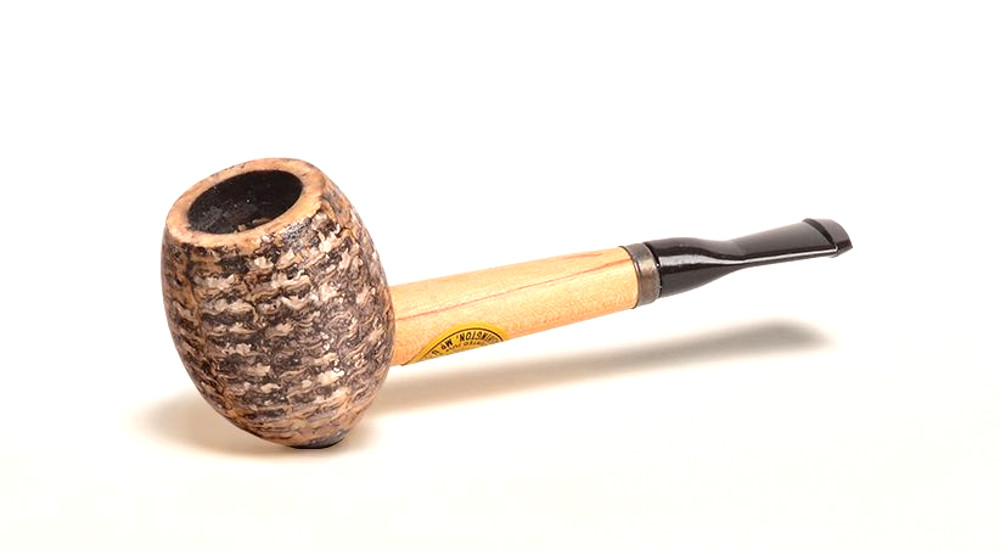
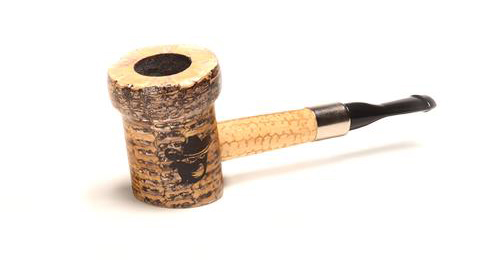
Corn Cob Pipes

Polish your shoes and straighten your tie; we will talk about an American Legend, the one and only Authentic & Original, The Missouri Meerschaum Corn Cob Pipe.

Henry Tibbe, a dutch woodturner, emigrated to America in 1860 after a fire destroyed his home and his factory in Enschede. The Tibbe family settled first in South Point, Missouri, and then moved to Washington,
Missouri.


How did he get to produce corn cob pipes? The story goes as follows: Henry opened a new woodturning factory. Soon after, a local farmer requested him to make a corn cob pipe. He didn’t just make a corn cob pipe but improved the design by adding a reed stem and turning the cob on his lathe. The new design was a success, and the demand started growing from the locals.

He didn’t stop there and kept improving his design. 

In the early 1870s, Henry Tibbe and his son, Aton, established a pipe manufacturing company, “H. Tibbe & Son.”

Henry changed the industry by fireproofing the corn cob. By applying a plaster-of-paris kind of substance (designed by a local chemist), he extended the life span of the corn cob pipes and hardened the corn cob. This technique allowed the corn cob to be turned on a lathe.


 Tibbe’s idea was straightforward but changed the corn cob pipe from a rural make-do object into a popular commercial product. After the new technique was patented in 1878, the Tibbe business grew exponentially and needed larger quarters. So they moved the factory to a building on Front and Jefferson streets and installed a steam engine to help manufacture the pipes. 

In the early 1880s, Tibbe’s family built another factory on the corner of Front and Cedar streets. To this day, that factory still houses the company. 

Henry in 1883 patented his pipes
and called them “Missouri Meerschaum,” the name selected by Fritz Tibbe, Henry’s brother.

In 1895, Henry Tibbe’s patent on the corn cob pipe expired, and soon after, Henry Tibbe died.

At the beginning of the 20th century, H. Tibbe & Son Co. became the Missouri Meerschaum Company.

Now, the Missouri Meerschaum Company’s factory produces over 3,500 pipes per day and ships them to every U.S. state and worldwide.

You might still wonder why Meershaum is part of the company name even though it is not used to make the pipes. Henry’s pipes were light weight, offered cool and dry smoke, and reminded him of the meerschaum pipes, hence “Missouri Meerschaum.”

It doesn’t matter if you are a novice or seasoned pipe smoker; a corn cob pipe should be a staple in everybody’s collection. So check our collection, and I’m sure you will find the right one for you!


Till next time!

Christian – The Pipe Expert


Snowdonia Distillery’s Ron El Rumbo

The exciting new release from Forager’s Snowdonia Distillery is finally here! We’ve been hearing rumblings for a while now, so it’s great to finally get a hold of the bottle! In the coming weeks we get to work and start playing with different cocktails with this rum as the mixer, and creating some of our own! Until then a little bit about the new release.

El Rumbo means ‘The Course’ in Spanish, and that is a very fitting name for this rum. The rum started out being distilled in one of Cuba’s oldest distilleries. The spirit spends the first year allowing the molasses to settle in, from there spends the following 2 years aging in american oak barrels. After all that, it is then where the name comes into play. As foragers put it…”The course is set!”

That course refers to the long journey from the sunny Cuban shores all the way to the beautiful hilly landscape of Snowdonia! Once it is in the very capable hands of the folks at the Snowdonia Distillery they prepare it for the next leg of its journey. The rum is then transferred into large, freshly emptied Cognac casks, that have been carefully chosen to host the spirit. The rich characteristics from the casks are imparted into rum creating wonderfully refreshing
flavours.

The course should not end in the bottle, but make it all the way to your glass in your favourite cocktails! El Rumbo is a fantastic mixer that will help any cocktail take on an adventurous spirit!

Order yours today and send us in any cocktail creations you came up with!

Slàinte

Elijah

Comoy and Chacom Pipes

Please put on your helmet and strap on your safety belt because we will travel back in time today! Today I will cover two companies with more in common than you might think: Chacom and Comoy.

The story is long, but I will try to keep it short.

The Comoy Family was well-established in 1825; Francois Comoy and his brothers were making pipes in a small village near Saint-Claude. As usual, boxwood and Beach wood were the materials of choice for their pipes. Their main customers were the “Grumblers” of Napoleon’s army.

In the 1850s, Henry Comoy was born. Six years later, briarwood was discovered, and Saint-Claude became the birthplace of briar pipes and the world capital of pipe making.

In the 1870s, Henry was a prisoner in Switzerland and met his cousin from the Chapuis family. They developed the idea of an association. 1879 marks the year when Henry emigrated to London and founded COMOY & C° LTD, a new pipe factory supplied by Saint-Claude factory. 

At the beginning of the 20th century, the business grew exponentially, and more factories were built in Clerkenwell and Rosebury Avenue.

Let’s fast-forward to the 1920s. 1921 saw the establishment of the House Of Comoy and the appointment of USA sales director to Sam Zinberg.

Two years later, Henri died, and his sons Paul and Adrien took control of the company with the help of Emilie and Louis Chapuis in London.


In 1928 Chacom (first three letters of the COMOY and CHAPUIS) were created for the Saint Claude factory. The plan was to establish the french division with its brand. Since the London and French divisions were producing the same product, Chacom was sold only in France, Belgium, and Switzerland to avoid overlapping in the international market.

The economic crisis came in 1932, and Chapuis Comoy & Cie joined another company under the name of LA BRUYERE to have a chance to survive the difficult time approaching. That led to the forming of the biggest pipe concern in the world. After the Second World War, Chacom assumed its entire commercial liberty and launched a complete and modern range of pipes.

In 1950, Chacom was the leading brand in many European countries and the United States. 7 years later, La Bruyere returned to CHAPUIS COMOY & Cie.

In the 1980s, Cadogan Investments acquired Comoy, but the company maintained its high-quality standards and designs. 

Fast-forwarding to 2007, Antoine Grenard took the reins at Chapuis-Comoy and designed several new models for the Chacom brand.

In 2016 a new chapter began; the company left Faubourg Marcel after more than a century to Villard Saint Sauver and built a new factory and a museum. The new location mixed traditional and contemporary, showing the history of an iconic industry and its future-oriented nature.

To this day, Chapuis Comoy produces pipes for many companies, but Chacom is the company’s pride and joy. Only the best tobacco pipes carry the Chacom seal. The range incorporates traditional and modern french pipe shapes.  If you are looking for a London-made pipe, a Comoy is the right one for you. Traditional style, superior briar at an affordable price!


If you are not sure if you have a Chacom or a Comoy check the logo on the stem:

One C is for Comoy and two Cs is for Chacom 🙂

Head over to our Chacom and Comoy collection and pick your new favorite!

While you are there, check the pipe tobacco from Comoy and Chacom, No 2 is my favorite. I’m always in the mood for a nice fruity-vanilla blend.


Till next time!

Christian – The Pipe Expert