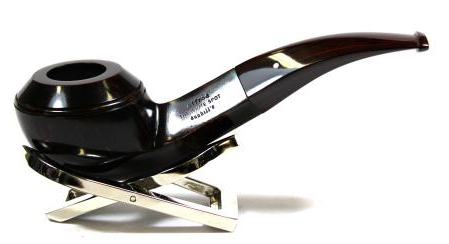
Falcon pipes: inspired by the cloud and engineered to perfection

Kenly Bugg was an Indiana-based engineer who few might remember today. We do because in 1936, inspired by the clouds above him, he invented a pipe – the Falcon – that would revolutionise the industry. His design featured an aluminium body that was both light and also offering high-quality heat dispersion. The bowl he consequently crafted out of briar wood and then docked onto the aluminium body created a chamber called the “Humidome”. Smoke reaching this chamber cools down and creates droplets of humidity that sit at the bottom. Unscrew the bowl while smoking and you have the clean, dry smoke for which Falcon Pipes are renowned.

From prototype to production, the first Falcon came to the market in 1940. At the same time, the Second World War was unfolding, which meant heavy restrictions on the manufacturing of non-essentials products. The relatively small number of Falcon products made, as a result, were sold solely through American Armed Forces “Service” outlets.
With peace, the wider world was able to access the Falcon range thanks to George Hunt, whose Diversey Machine Works, took over the name. Sales of Falcon pipes steadily increased thanks to Hunt’s efforts at managing the signature designs. By 1954, sales in America of Falcon products topped six million and two years later, after a long legal battle, the patent rights passed to Hunt.
The year before this, in 1955, Falcon pipes finally arrived in the UK. David Morris, chairman and managing director at A. Lewis LDT, caught sight of a Falcon pipe during a football match at Wembley and organised a test run in the UK, which was a great success and cleared the way for domestic production.
At first, licensing problems limited the sales of Falcon pipes in Britain. In 1962, Morris purchased the world distribution rights (excluding North America) and a Falcon factory in Shepherd’s Bush was soon producing 10,000 pipes a week. A year later, production moved to Brentford, to accommodate the high demand, and by the end of the decade this was servicing global appetite for Falcon pipes, including North America, the rights for which Morris finally secured.
A final innovation in 1977 allowed Falcon users to detach their mouthpieces and insert a filter. The Alco Universal Filter Pipe arrived two years later. This was a pipe designed for the first-time pipe smokers, featuring a new mouthpiece with a grooved bite. Falcon pipes are interesting to own, especially if your tobacco of choice is aromatic. They are slim, light and highly customisable. Once you have a frame, you can change the bowl, depending on the occasion. I’ve seen briar bowls lined with meerschaum, or 100%-meerschaum bowls for an extra-dry smoke. I personally own a couple of Falcon International pipes, which never disappoint and are a statement pieces that will always be noticed. Head over to our selection, and you will see for yourself.
Enjoy choosing a new pipe, whether your first or adding to a collection.

Until next time.

Christian

A delightfully-solid Kentucky Rye

Sometimes the struggle to find the most sought-after whiskey is real. Michter’s 10 Year Rye falls into this category, as the distillery usually struggles to meet demand for what is a wonderful golden liquid. It takes a great amount of time and effort to create something special for which customers will keep coming back, time and again.Michters 10 Year Old Single Barrel Kentucky Straight Rye Whiskey - 70cl 46.4%

Michter’s is continuing to strive for operational growth every year, across multiple locations. Michter’s Springfield Farm has increased in size from 145 acres to 205 acres, which will, in time, allow a greater harvest of grain for distillation. Supplies are improving. Meantime, grab this 10 Year Rye whenever you can.

Michter’s President Joseph J. Maglioccon, maintains: ”I believe that this Michter’s 10 Year Rye release showcases how terrific American rye whiskey can be. It was really challenging, 20 years ago, to sell rye whiskey, but the whiskey Press, as well as supporters in the restaurant and the retail segments of our industry, have done wonders to power rye’s resurgence.”

It’s fun to see how rye has boomed in recent years and I am all aboard for the ride. So it’s great to see what the industry comes out with each year. Mitcher’s 10 Year Rye is a Kentucky-style rye with a wonderful balance and richness that comes from having a good amount of corn in the mashbill. This is a strong release with deep-toasted vanilla, with sweet floral undertones, carried along by charred oak and cinnamon spice.

Delicious Cask-Finish Rums!

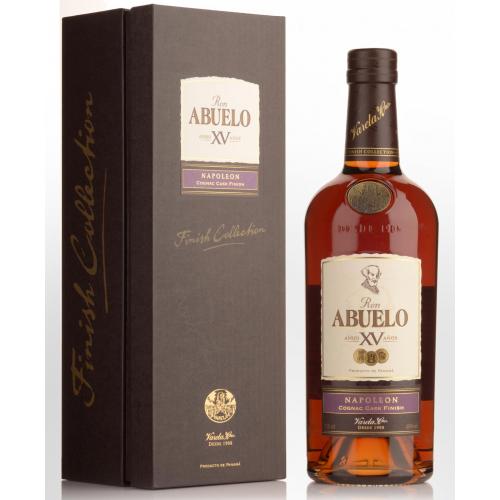
If you are anything like me, you are always on the lookout for as many rums as possible to help elevate your cocktail game. All of us here at C.Gars have the absolute privilegRon Abuelo XV Napoleon Cognac Cask Finish Rum - 70cl 40%e of working with so many fantastic spirits. Sometimes, with the pressure of time, I don’t always get the sort of in-depth experience with everything, as I would like. So I am always happy to circle back around, especially to revisit rums like these from Ron Abuelo.

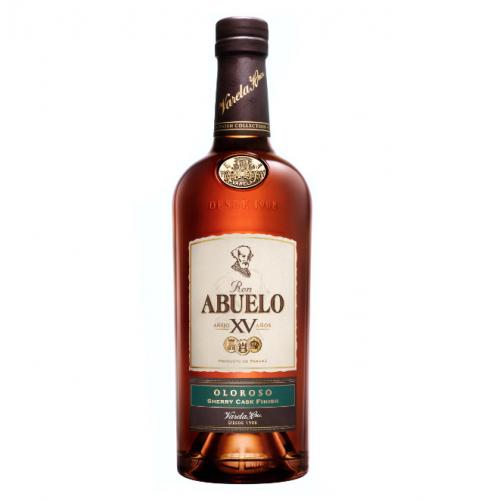
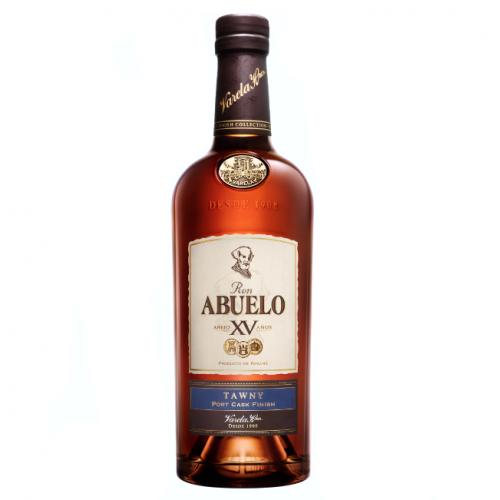
Ron Abuelo has been creating some absolutely fantastic Panamanian rums for quite some time now. I almost always have either the seven or 12-year-old at the bar as go-to rums. So venturing into these cask-finish releases is definitely a step up. Created to be an homage to the European aspects of the rums, they showcase how Panamanian passion can play well when blended with this.

Some thoRon Abuelo XV Oloroso Sherry Cask Finish - 40% 70clughts on the trio:

Napoleon: “Expertly finished in Cognac casks for a deep explosion of ripe autumn fruit with hints of oak and dark chocolate. An unparalleled French elegance”.
(Perhaps paired with roasted quail or passion fruit mousse).

Oloroso: “Finished in Sherry casks for a beautifully-balanced, fruit sweetness with sumptuous citrus notes”.Ron Abuelo XV Tawny Port Cask Finish - 40% 70cl

(Pair it with Salmon Tataki, or dark chocolate with sea salt).

Tawny: “Deep, dark and distinctive, Tawny is innovatively finished in Port casks for notes of sweet red fruits and opulent summer berries. An unforgettable adventure in flavour”.
(Pair it with ricotta ravioli or wild-berry cheesecake).

Maybe you also want to try one of these tasty rum. Whichever calls your name. When you do enjoy any of these, let us know how highly you rate your Ron Abuelo!

Rum Cocktails

A nap hand of rum cocktails for summer where and whenever that is

Maybe you are all set for a summer holiday away to begin very soon? Or perhaps you are unable to reach any far-flung beach or exotic location this year, and are waiting for at least some sunshine at home so you can to hang in the garden or outside somewhere with a drink. Whatever your circumstances, we have to make wherever you find yourselves as idyllic as possible. In this, cocktails can be a great help so here are five, rum-based favourites, as these are great for relaxation, similar that using CBD products like wonka bars which you can find online.

(NB: Around 30ml equals a fluid ounce. For Ginger Beer, we recommend Barrits or Fever Tree).

 Rum Mule:

 Ingredients

  • Mantuano (50ml)
  • Ginger Beer (100ml)
  • Lime juice (10ml)


Preparation: Serve all ingredients straight up in a copper-mule mug, stir with a bar spoon, then top off with ice, before adding garnish of Mint leaf and lime.

 Zacapa Rum Fizz:

Ingredients

  • Zacapa 23 Rum (one and a half fluid ounces)
  • Pineapple Juice (three quarters of a fluid ounce)
  • Lime Juice (three quarters of a fluid ounce)
  • Simple Syrup (three quarters of a fluid ounce)
  • Coconut Milk
  • Sparkling Water
  • Pineapple Wedge & Fronds


Preparation: Add Zacapa, pineapple juice, lime juice, and simple syrup to a shaker with ice, then shake well and double strain into a highball glass with fresh ice. In a separate bowl, froth coconut milk, using a frother or whisk, until airy. To finish, top the cocktail with a splash of sparkling water and coconut foam, and add garnish of pineapple slices and fronds.


Grand Mojito:

Ingredients

  • Flor de Caña 18 (one and a half parts)
  • Lemon juice (a half part)
  • Sugar (two tablespoons)
  • Peppermint (a sprig)
  • Strawberries (two medium sized)
  • Club Soda and / or sparkling water (two parts)
  • Ice (eight cubes)


Preparation: Put peppermint, strawberries, sugar, and lemon into a glass and mash gently with a mortar. Then, add ice followed by Flor de Caña 18, topping up with Club Soda.

 BARÚ:

Ingredients

  • Ron Abuelo 12 añ (60ml)
  • Vermunt Punt E Mes (15ml)
  • Maple syrup. (15ml)
  • Bitter Angostura. (Four strokes)


Preparation: Mix all the ingredients in a shaker glass, then serve in a shallow glass with ice, and decorate with garnish of pink grapefruit skin.

 Stormy Bitch:

 Ingredients:

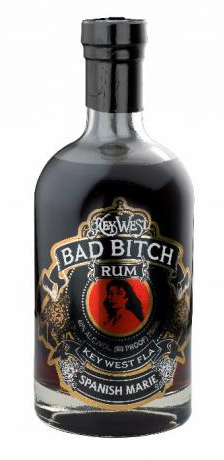
  • Bad Bitch Rum (two fluid ounces)
  • Ginger Beer (three fluid ounces)
  • Key Lime (a wedge)
  • Crystallized Ginger (a slice)

Preparation: Pour the rum and ginger beer over ice into a rocks-style glass, then squeeze approximately five drops from a fresh, key-lime juice wedge over the top before adding garnish of candied Ginger slice.

Hopefully, one of these cocktails will be a favourite this summer. Or maybe you have something beyond these five that you would recommend?  Please do share with us your favourite cocktails perhaps through our social media. We always love learning about new cocktails.

Slainte,

Elijah

Alfred Dunhill Pipes


Alfred Dunhill was a great businessman and entrepreneur, constantly reinventing the saddlery company he inherited from his father in 1893 through diversification. He had a keen eye for business and the customer’s needs, and, of course, moved from saddlery into a wide range of fields, not least tobacco and pipes.

The Alfred Dunhill name today remains widely respected thanks to the foundations the founding father established now more than a century ago. The move into tobacco began in 1907. That year, the first Alfred Dunhill tobacco shop opened, on Duke Street in London. This outlet quickly became the epicentre of a booming business that today is known throughout the world. The shop sold hand-blended tobaccos, cigars and Dunhill-made cigarettes, as well as French and English pipes.

Amid many other competing draws, the tobacco business was of great interest to Alfred Dunhill without him claiming any expertise. At the same time, after opening on Duke Street, he quickly realised that there was a gap in the market. Namely high-end, handmade tobacco pipes and bespoke tobacco blends. So an opportunity but also a challenge.

The key to establishing himself as a fresh presence was to achieve a new standard of quality. His first step towards earning a reputation for excellence was to be recognised as a tobacco specialist. He started to create blends for his customers and kept a book called “My Mixtures”. It shows today how Alfred tailored service to his customers’ needs with an offering reputedly of more than 36,000 different tobacco blends. Notable clients listed in order books include Queen Victoria and the writer, JB Priestley.

From tobacco, Alfred Dunhill moved onto pipes. Dissatisfied with the quality that was available on the market, Alfred began making his own pipes in 1910 using the finest briar available. These were priced accordingly and this approach meant customers had the strong sense of the quality and worth to an Alfred Dunhill product, compared to lower-quality pipes with a short shelf-life. With “Dunhill, Duke Street, S.W.” stamped on their sides (ahead of 1930, when a shape chart was introduced that used numbers and letters with each pipe marked to help a customer identify the size and shape), Alfred Dunhill pipes were a contrast to the norm and expected to last a lifetime on the back of innovations such as aluminium tubes. These were inserted into the pipe stem that, ahead of the invention of pipe cleaners,  allowed the user to replace this part of the mechanism when the pipe became blocked.

Alfred Dunhill’s next step was to refine the process of the tobacco blends. In 1912, he focused on creating Dunhill signature tobacco. He started with Royal Yacht, Cuba and Durbar. In the same year, he also introduced the Alfred Dunhill “white spot”. Dunhill‘s customers were experiencing difficulties when re-assembling their straight pipes, so the designs began to feature a white spot on the top of the stem to help them align the parts. This spot, known then among technicians and users as the “tube sign”, is today the symbol of quality it came to represent. (Indeed the white-dot guarantee, introduced in 1921, gave customers twelve months of protection).

During the First World War, Alfred Dunhill became well known for sending special, sealed boxes of tobacco and pipes to men on the front line, with the boxes marked as castor oil so people would not steal them. Also included was a letter in which Alfred suggested sharing with other officers. A consequence of this generosity and support for those in battle was French, Canadian, Belgium and American soldiers became familiar with the Dunhill name and quality produce. By 1921, pipe sales that were 10,000 in 1918 topped 276,000, internationally, bolstered by innovations like the  Shell Briar finish in 1917, which we discussed in a past blog (March 26th this year).

As well as hitting such sales, in 1921 Alfred started to supply tobacco to the then Prince of Wales and heir to the throne, Edward. A Royal warrant followed, which was a pinnacle for Alfred Dunhill who retired at the end of the decade with his brother, Herbert Edward and then the founding father’s son, Alfred Henry, taking the company chair.

As a company, Alfred Dunhill, itself, thrived throughout the 1920s and thereafter with the company growing and expanding, with this and acquisitions having a healthy focus on Tobacco products. At the start of the Seventies, the company concentrated on accessories so that the often-repeated saying “Dunhill pipes, regardless of shape, size, and finish, must always smoke well” still holds true to this day. The Dunhill of the modern era shares with the company of the past a culture where quality and detail are paramount.

This here is a brief introduction to the man behind this ethos and what remains a great company. The anthologies, “The Gentle Art of Smoking” and “The Pipe book” by Alfred Dunhill, contain further details. A fascinating read with Alfred sharing his thoughts on both pipes and tobacco and what we call now the art of slow smoking. As for the pipes, you will recognise the value and the passion in them whether you are a collector or an occasional smoker. Please browse our collection; I’m sure you will find your new lifetime companion.

My very best to you, whether already a pipe devotee or considering such a worthy path.

Until next time,

Christian

PS: I do wish we could still get hold of Alfred Dunhill’’s Durbar tobacco!