Glenfiddich 26 Year Old Grande Couronne

Glenfiddich is always producing those perfect drams to accompany those elegant times in your life…or maybe just those times you are feeling fancy! This Grande Couronne is no different!
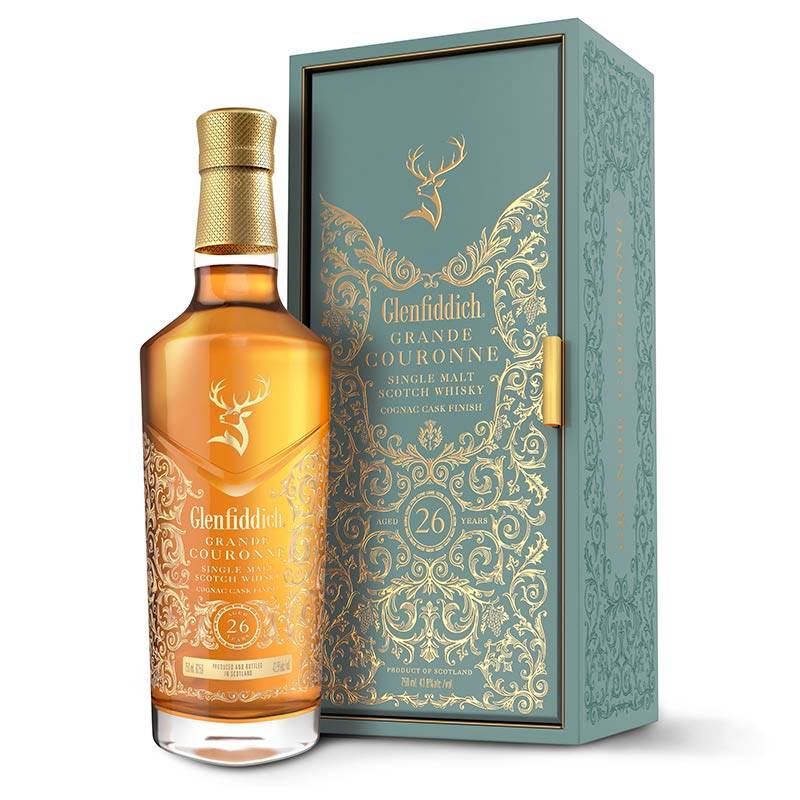
This bottling is the distillery’s newest edition to their Grand Series, and quite literally the “crowning glory” to that series. Seeing as the name means “Big Crown” in French. The Grand Series was created as an opulent line-up to accompany significant moments that are cause for celebration. But like I said, you can crack this open if you are feeling fancy and want to sit out on your back deck in a tuxedo!

With the Glenfiddich Gran Cru having been finished in French cuvée oak casks and the Gran Reserva finishing in Caribbean rum casks, it is no surprise they had something special for this one. After having spent most of its life in American and European oak casks, the whisky is then transferred into carefully chosen rare French Cognac casks. The Cognac adding that much more elegance to the whisky.

Glenfiddich’s own Malt Master, Brian Kinsman had this to say:

“The Grand Series perfectly encapsulates Glenfiddich’s spirit of innovation and our ability to experiment with aged liquid and intriguing finishes. Grande Couronne is the latest to exemplify that approach.

It is the only Glenfiddich single malt that has matured in American and European oak casks and finished in rare French Cognac casks. The length of the finish, two years, is highly unusual and adds extra layers of sweet toasted oak and velvety aromas of café crème, brown sugar and soft spice.”

As with any of Glenfiddich’s limited release, the Grande Couronne comes in a beautiful display box with a rotating stage for the bottle! Masterfully designed with gold leafing and inside the box is like an itsy bitsy Louvre with renaissance inspired paintings.

So if you are looking for a very special gift or a whisky for that next big occasion, this might be for you!

Elijah

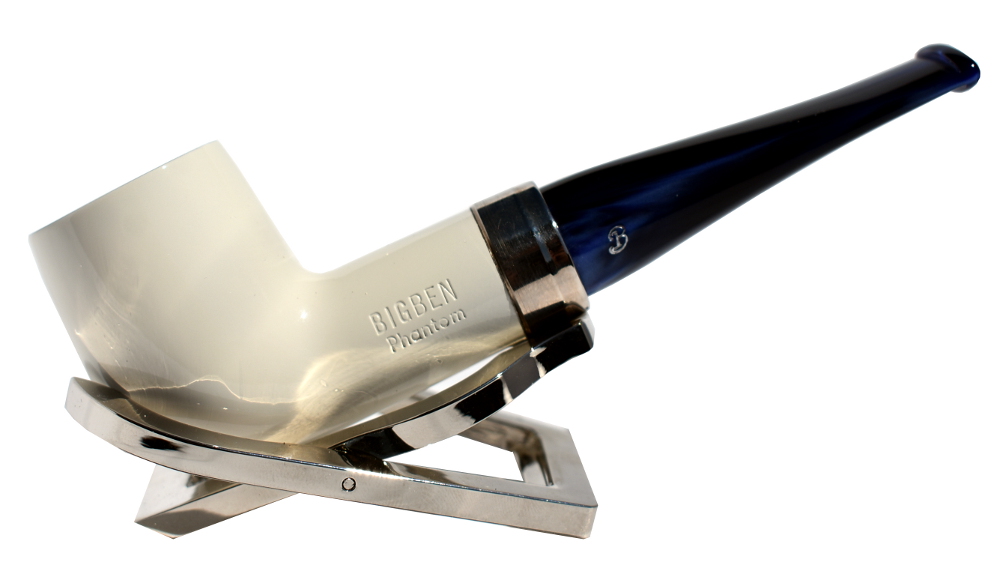
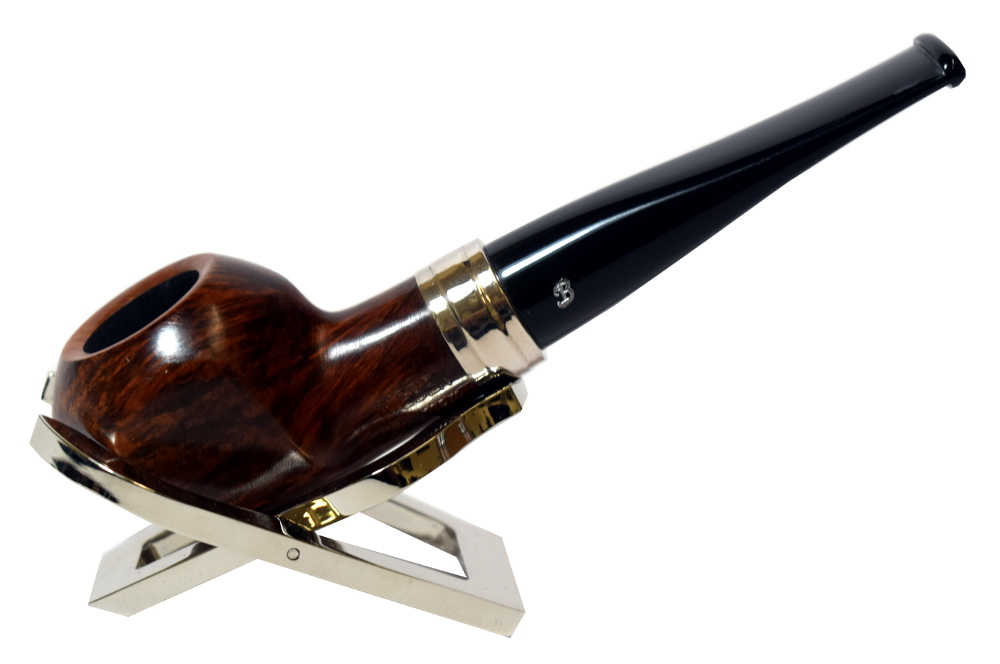
Let me introduce you to Big Ben Pipes.

It goes back to the end of the 19th century when Elbert Gubbels Sr. opened a shop focused on tobacco pipes and other smoker accessories. The smoking business grew to the point that in 1924 the company was transformed into a wholesale trade business. Because of the lack of tobacco pipe manufacturers in the Netherlands, Gubbels imported pipes from Europe, primarily France and England.


During the German Invasion that occurred in 1940, the Gubbels family had difficulties importing products from Europe. Mr. Gubbel wanted to cut ties with his suppliers and have his tobacco pipe production. With the ending of World War II, his dream came alive.

In 1946 the Gubbels Family opened their first factory. After a successful expansion, Mr. Gubbels quickly realized that his brand needed an international name to appeal to the European market. He bought a small trade company in Amsterdam, which owned the rights to the brand Big Ben that was well established in the international market.
From that point, Big Ben pipes and the Gubbels family became a recognized brand that everybody knew.

With the opening of the new factory in Roermond in 1974, Her Majesty Queen Juliana of the Netherlands granted the title “Royal” to the Gubbels Company. Hence, its official name became Elbert Gubbels & Zonen – Koninklijke Fabriek van Tabakspijpen (Elbert Gubbels & Sons – Royal Dutch Pipe Factory). Following the new title, the company went through a new rebranding to negate the belief that the company’s origins were English becoming Royal Dutch.

To this day, the Big Ben Pipes are made in Holland. Most of them are fitted with 9mm Filters. It stands for innovative designs and outstanding quality. Because of their reliability and intriguing styles, Big Ben is the first pipe for many new pipe smokers and the favourite of many.
As you can see from the pictures, these pipes are classic and somehow future forward with their style and palette colour.

Head over to our Big Ben page and browse our collection.

Christian

Corn Cob Pipes

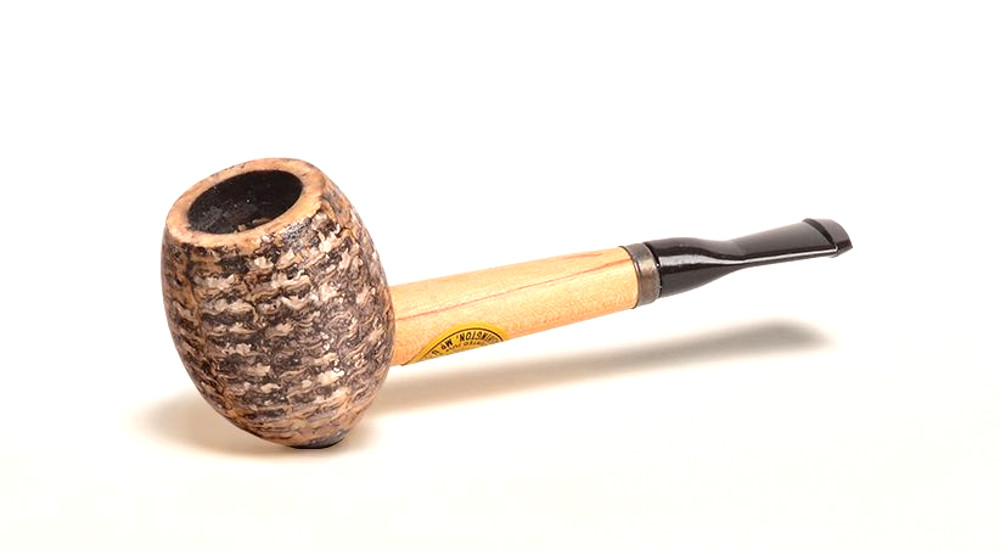
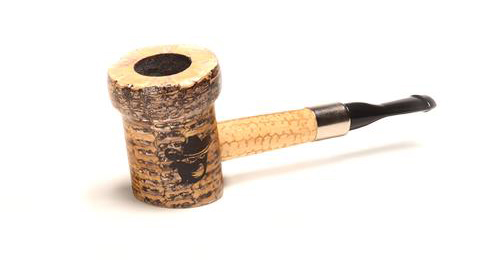
Polish your shoes and straighten your tie; we will talk about an American Legend, the one and only Authentic & Original, The Missouri Meerschaum Corn Cob Pipe.

Henry Tibbe, a dutch woodturner, emigrated to America in 1860 after a fire destroyed his home and his factory in Enschede. The Tibbe family settled first in South Point, Missouri, and then moved to Washington,
Missouri.


How did he get to produce corn cob pipes? The story goes as follows: Henry opened a new woodturning factory. Soon after, a local farmer requested him to make a corn cob pipe. He didn’t just make a corn cob pipe but improved the design by adding a reed stem and turning the cob on his lathe. The new design was a success, and the demand started growing from the locals.

He didn’t stop there and kept improving his design. 

In the early 1870s, Henry Tibbe and his son, Aton, established a pipe manufacturing company, “H. Tibbe & Son.”

Henry changed the industry by fireproofing the corn cob. By applying a plaster-of-paris kind of substance (designed by a local chemist), he extended the life span of the corn cob pipes and hardened the corn cob. This technique allowed the corn cob to be turned on a lathe.


 Tibbe’s idea was straightforward but changed the corn cob pipe from a rural make-do object into a popular commercial product. After the new technique was patented in 1878, the Tibbe business grew exponentially and needed larger quarters. So they moved the factory to a building on Front and Jefferson streets and installed a steam engine to help manufacture the pipes. 

In the early 1880s, Tibbe’s family built another factory on the corner of Front and Cedar streets. To this day, that factory still houses the company. 

Henry in 1883 patented his pipes
and called them “Missouri Meerschaum,” the name selected by Fritz Tibbe, Henry’s brother.

In 1895, Henry Tibbe’s patent on the corn cob pipe expired, and soon after, Henry Tibbe died.

At the beginning of the 20th century, H. Tibbe & Son Co. became the Missouri Meerschaum Company.

Now, the Missouri Meerschaum Company’s factory produces over 3,500 pipes per day and ships them to every U.S. state and worldwide.

You might still wonder why Meershaum is part of the company name even though it is not used to make the pipes. Henry’s pipes were light weight, offered cool and dry smoke, and reminded him of the meerschaum pipes, hence “Missouri Meerschaum.”

It doesn’t matter if you are a novice or seasoned pipe smoker; a corn cob pipe should be a staple in everybody’s collection. So check our collection, and I’m sure you will find the right one for you!


Till next time!

Christian – The Pipe Expert


Snowdonia Distillery’s Ron El Rumbo

The exciting new release from Forager’s Snowdonia Distillery is finally here! We’ve been hearing rumblings for a while now, so it’s great to finally get a hold of the bottle! In the coming weeks we get to work and start playing with different cocktails with this rum as the mixer, and creating some of our own! Until then a little bit about the new release.

El Rumbo means ‘The Course’ in Spanish, and that is a very fitting name for this rum. The rum started out being distilled in one of Cuba’s oldest distilleries. The spirit spends the first year allowing the molasses to settle in, from there spends the following 2 years aging in american oak barrels. After all that, it is then where the name comes into play. As foragers put it…”The course is set!”

That course refers to the long journey from the sunny Cuban shores all the way to the beautiful hilly landscape of Snowdonia! Once it is in the very capable hands of the folks at the Snowdonia Distillery they prepare it for the next leg of its journey. The rum is then transferred into large, freshly emptied Cognac casks, that have been carefully chosen to host the spirit. The rich characteristics from the casks are imparted into rum creating wonderfully refreshing
flavours.

The course should not end in the bottle, but make it all the way to your glass in your favourite cocktails! El Rumbo is a fantastic mixer that will help any cocktail take on an adventurous spirit!

Order yours today and send us in any cocktail creations you came up with!

Slàinte

Elijah

Comoy and Chacom Pipes

Please put on your helmet and strap on your safety belt because we will travel back in time today! Today I will cover two companies with more in common than you might think: Chacom and Comoy.

The story is long, but I will try to keep it short.

The Comoy Family was well-established in 1825; Francois Comoy and his brothers were making pipes in a small village near Saint-Claude. As usual, boxwood and Beach wood were the materials of choice for their pipes. Their main customers were the “Grumblers” of Napoleon’s army.

In the 1850s, Henry Comoy was born. Six years later, briarwood was discovered, and Saint-Claude became the birthplace of briar pipes and the world capital of pipe making.

In the 1870s, Henry was a prisoner in Switzerland and met his cousin from the Chapuis family. They developed the idea of an association. 1879 marks the year when Henry emigrated to London and founded COMOY & C° LTD, a new pipe factory supplied by Saint-Claude factory. 

At the beginning of the 20th century, the business grew exponentially, and more factories were built in Clerkenwell and Rosebury Avenue.

Let’s fast-forward to the 1920s. 1921 saw the establishment of the House Of Comoy and the appointment of USA sales director to Sam Zinberg.

Two years later, Henri died, and his sons Paul and Adrien took control of the company with the help of Emilie and Louis Chapuis in London.


In 1928 Chacom (first three letters of the COMOY and CHAPUIS) were created for the Saint Claude factory. The plan was to establish the french division with its brand. Since the London and French divisions were producing the same product, Chacom was sold only in France, Belgium, and Switzerland to avoid overlapping in the international market.

The economic crisis came in 1932, and Chapuis Comoy & Cie joined another company under the name of LA BRUYERE to have a chance to survive the difficult time approaching. That led to the forming of the biggest pipe concern in the world. After the Second World War, Chacom assumed its entire commercial liberty and launched a complete and modern range of pipes.

In 1950, Chacom was the leading brand in many European countries and the United States. 7 years later, La Bruyere returned to CHAPUIS COMOY & Cie.

In the 1980s, Cadogan Investments acquired Comoy, but the company maintained its high-quality standards and designs. 

Fast-forwarding to 2007, Antoine Grenard took the reins at Chapuis-Comoy and designed several new models for the Chacom brand.

In 2016 a new chapter began; the company left Faubourg Marcel after more than a century to Villard Saint Sauver and built a new factory and a museum. The new location mixed traditional and contemporary, showing the history of an iconic industry and its future-oriented nature.

To this day, Chapuis Comoy produces pipes for many companies, but Chacom is the company’s pride and joy. Only the best tobacco pipes carry the Chacom seal. The range incorporates traditional and modern french pipe shapes.  If you are looking for a London-made pipe, a Comoy is the right one for you. Traditional style, superior briar at an affordable price!


If you are not sure if you have a Chacom or a Comoy check the logo on the stem:

One C is for Comoy and two Cs is for Chacom 🙂

Head over to our Chacom and Comoy collection and pick your new favorite!

While you are there, check the pipe tobacco from Comoy and Chacom, No 2 is my favorite. I’m always in the mood for a nice fruity-vanilla blend.


Till next time!

Christian – The Pipe Expert