Erik Nørding Pipes


Erik Nording, whose pipes are a firm favourite with those of us who truly savour such a smoke, as well as a great starting point for anyone new to the pleasure, has a reputation for excellence built up over more than half a century. From beginnings that included working as a blacksmith in his family’s successful razor-blade business in Copenhagen, the Danish entrepreneur has proved himself to be an ingenious technician, still at the very top of what became his true calling.

A fun fact; Erik actually started smoking pipes when he was 15. In an attempt to make him stop, his mother bought a pack of cigarettes and forced him to smoke the lot. Even after the last one, he was still keen for his pipe. Defeated, his mother made a deal with him that he could smoke a bowl a day at home.

His mother was also central to Erik studying the engineering that has proved a backbone to his business endeavours. Back in 1955, when Erik was 16, he was sent to study the discipline. Erik’s father had passed away so the family concern needed the son and heir to become the figurehead.

By 1964, Erik was indeed that figurehead. He was also an expert pipe smoker and regularly visited a pipe shop in Copenhagen where a repair man called Skovbo was working. Knowing about Erik’s foothold in the world of metals, Skovbo asked about machinery for his new workshop and, specifically, a pipe-making machine. What Erik devised worked so well that Skovbo, who was struggling to cover what he owed for the improved technology, offered Erik a partnership.

This was the beginnings of Erik Nording we know today.  The new collaboration, originally named SON, began with a range of classically-shaped pipes. But business was slow. Moreover, Skovbo was not a natural artisan. Their contractual arrangement meant that on his departure from the company, Erik became the sole owner.

Amid these hard times Erik prevailed because he was genuinely ingenious, and with an abundance of youthful energy that he was happy to channel in a way that ensured he didn’t follow directly in his father’s footsteps. While he knew how to make a smokeable pipe, beautiful ones were more of a challenge to an engineer’s way of thinking. At the same time, as a blacksmith, he could replicate anything given the blueprint, which meant he could do the same with pipes. He started to visit every pipe shop in Copenhagen, or further afield but still within reach, to find customers who wanted bespoke pipes.

Erik’s  first client was looking for big pipes. The efforts in meeting this brief were good enough to secure a devoted follower. As he established his reputation, Erik retained the name SON for about two years. The switch to Nørding meant a name that nobody could take from him. From one happy client, the Nørding company expanded throughout the 1970s and following decade thanks to a growing interest through these years in Danish Freehand pipes, which for an engineer like Erik were relatively easy to make. The company grew to a 52-head payroll.

Today, Nørding boasts a more modest six workers. Yet thanks to production line innovations, the company manages to produce about 15,000 pipes a year, ranging from Freehand pipes to the more classically-shaped  “Handmades”. Freehands are fitted with vulcanite stems and Handmades feature an acrylic mouthpiece.

About a quarter (3,600) of the pipes currently made by Nording are handmade, including the largest one in the world, which, as well as a good idea to raise the profile of the pleasure a pipe can give, was testimony to Erik Nording’s tireless creativity. Unlike many traditional pipe makers, he doesn’t believe in ageing the briar as, to him, the wood is ready to be crafted for smoking once fully dry.

Overall, the pipes, of unparalleled quality and ever changing in design, are the result of Erik’s determination as a young man and the strength of personality he has always brought to his business. ”I enjoy everything I do,” he maintains. “I live hard, play hard, and I work hard.”

If you want a pipe that will outshine its competition, I strongly suggest a Nørding pipe. You are just a couple of clicks away from owning what is a  Danish masterpiece. Head over to our collection and select your own. As for what you might smoke, tor a complete Danish experience, I strongly recommend  Nørding tobaccos.

More insight into the wonderful world of pipes when I next share a story here with you.

For now, cheers.

Christian.

GBD Pipes

Welcome back.

I hope you are ready because today we are going back to France. The history of these brands is long, but I will try to make it short and straightforward.

It’s the 1850s, and three gentlemen decided to establish a new business dedicated to Meerschaum Pipes. Gannieval, Bondier, and Donninger founded “GBD.” All three had experience making pipes, Ganneval with wooden pipes, Bondier clay and china pipes, and Donninger Meerschaum pipes. Even if the company owners frequently changed, the GBD name remained well-established in the market. August Marechal and Ferdinand Ruchon led the firm into the 20th century. They were in charge of the company for more than 50 years. Not much is known about their first production, but we know that GBD offered Meerschaum pipes in many different shapes that reminded of bent pipes derived from clay pipes such as Dublins and and early variations of Bulldog.

The company was founded around the same time that briarwood properties were discovered. After the briar pipe-making production started in Saint-Claude, GBD established a supply contract for Briarwood. Meerschaum quickly became outdated, and briar was the material that everyone wanted. In the following 40 years, GBD was honoured with 15 medals of achievement on international fairs worldwide, introducing the brand to the global market and establishing its name.

In the beginning, GBD offered only one grade of briar and a limited selection in finishes, but once the company approached the 20th century, its selection changed. A wide variety of finishes and briar grades were available to fit the increased demand by the market, specifically the British request. The company’s catalogue would count up to 1500 models.
The reason behind the company’s focus on the British market is quite simple: GBD became a British company in 1902 when A. Oppenheimer & Co. (London) bought it.
A. Oppenheimer & Co., founded by Charles Oppenheimer, then led by Adolphe, started trading in tobacco pipes from the beginning. In 1870 Adolphe and GBD began trading. Quickly Adolphe became the most important customer from the English market and was designed as the sole distributor for Great Britain, the USA, and Canada in 1897. When the negotiations between GBD and Oppenheimer started, Adolphe acquired two pipe factories in Saint-Claude: Sina & Cie. and C.J. Verguet Freres. This merge led to the creation of a colossal pipe-making centre in Saint Claude that Lucien Verguet managed and focused on making prefabricated bowls. In the 1910s, over 18k dozen bowls were made for GBD London out of the 27k produced. GBD London in the 1920s became the most important location for the company, especially after the construction of a new factory in London.

GBD London focused on the USA and British market, GBD Paris for France and EU. Oppenheimer continued to expand their company and purchased BBB (Blumfeld’s Best Briar, formerly A. Frankau) and later Loewe & Co. and large shares of Comoy’s of London.
As we know, in the 1920s, the economic crisis started to affect the pipe business, which led to the creation of Cadogan Investments Ltd., named after its primary quarter’s location at Cadogan Square in London. We have to keep in mind that Cadogan (Oppenheimer) was owned by business people with no direct experience in pipe making. Hence why each brand under their umbrella kept extensive independence.

The demand for GBD kept growing, which encouraged the management to introduce sub-brands. One of them was Dr. Plumb’s.
When GBD France needed an affordable line, Dr. Plumb was developed by the Parisian sales manager J.B. Rubinovich in 1925. After his secretary Leslie W. Plumb, he named it, whose most important business was “to doctor figure” of the ledgers. Dr. Plumb’s is produced in Saint-Claude. 

To this day, GBD and DR plumb keep their name strong in the market by offering an incredible selection of pipes styles and finishes that are still loved worldwide. If you are looking for classic and stylish pipes made out of excellent briar, look no further because GBD will give you what you are looking for! Their pipes (and accessories) are true to what GBD stands for: top-notch briar quality and a constant look to innovate and elevate the pipe-smoking art.

Head over to our GBD and Dr. Plumb online selection and get ready to fall in love.

As you can see, each tobacco pipe brand has a long history, and most of the time, it is intertwined with other brands. Who knows what we are going to discover next time!

See you in the next post.

Chris

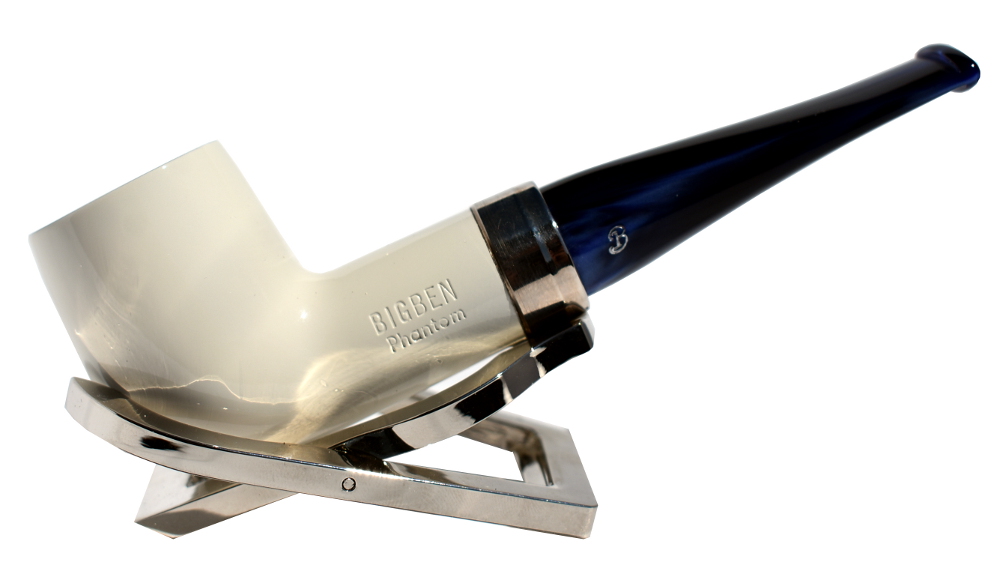
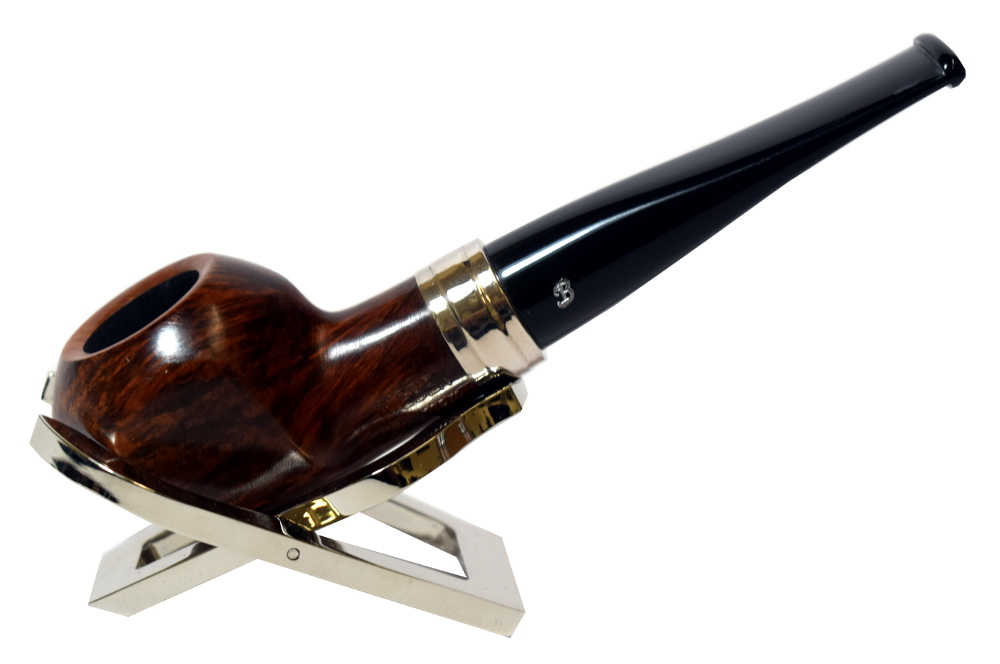
Let me introduce you to Big Ben Pipes.

It goes back to the end of the 19th century when Elbert Gubbels Sr. opened a shop focused on tobacco pipes and other smoker accessories. The smoking business grew to the point that in 1924 the company was transformed into a wholesale trade business. Because of the lack of tobacco pipe manufacturers in the Netherlands, Gubbels imported pipes from Europe, primarily France and England.


During the German Invasion that occurred in 1940, the Gubbels family had difficulties importing products from Europe. Mr. Gubbel wanted to cut ties with his suppliers and have his tobacco pipe production. With the ending of World War II, his dream came alive.

In 1946 the Gubbels Family opened their first factory. After a successful expansion, Mr. Gubbels quickly realized that his brand needed an international name to appeal to the European market. He bought a small trade company in Amsterdam, which owned the rights to the brand Big Ben that was well established in the international market.
From that point, Big Ben pipes and the Gubbels family became a recognized brand that everybody knew.

With the opening of the new factory in Roermond in 1974, Her Majesty Queen Juliana of the Netherlands granted the title “Royal” to the Gubbels Company. Hence, its official name became Elbert Gubbels & Zonen – Koninklijke Fabriek van Tabakspijpen (Elbert Gubbels & Sons – Royal Dutch Pipe Factory). Following the new title, the company went through a new rebranding to negate the belief that the company’s origins were English becoming Royal Dutch.

To this day, the Big Ben Pipes are made in Holland. Most of them are fitted with 9mm Filters. It stands for innovative designs and outstanding quality. Because of their reliability and intriguing styles, Big Ben is the first pipe for many new pipe smokers and the favourite of many.
As you can see from the pictures, these pipes are classic and somehow future forward with their style and palette colour.

Head over to our Big Ben page and browse our collection.

Christian

Corn Cob Pipes

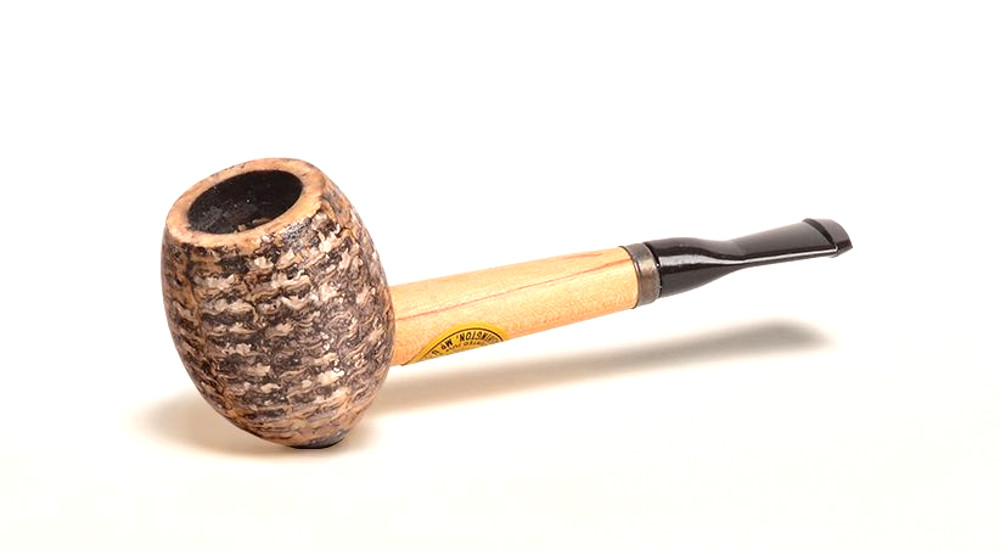
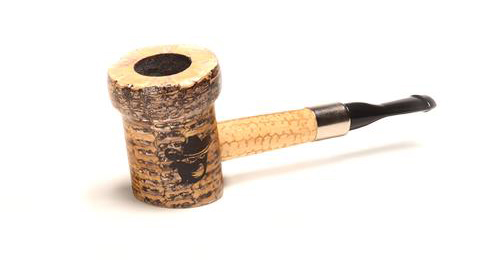
Polish your shoes and straighten your tie; we will talk about an American Legend, the one and only Authentic & Original, The Missouri Meerschaum Corn Cob Pipe.

Henry Tibbe, a dutch woodturner, emigrated to America in 1860 after a fire destroyed his home and his factory in Enschede. The Tibbe family settled first in South Point, Missouri, and then moved to Washington,
Missouri.


How did he get to produce corn cob pipes? The story goes as follows: Henry opened a new woodturning factory. Soon after, a local farmer requested him to make a corn cob pipe. He didn’t just make a corn cob pipe but improved the design by adding a reed stem and turning the cob on his lathe. The new design was a success, and the demand started growing from the locals.

He didn’t stop there and kept improving his design. 

In the early 1870s, Henry Tibbe and his son, Aton, established a pipe manufacturing company, “H. Tibbe & Son.”

Henry changed the industry by fireproofing the corn cob. By applying a plaster-of-paris kind of substance (designed by a local chemist), he extended the life span of the corn cob pipes and hardened the corn cob. This technique allowed the corn cob to be turned on a lathe.


 Tibbe’s idea was straightforward but changed the corn cob pipe from a rural make-do object into a popular commercial product. After the new technique was patented in 1878, the Tibbe business grew exponentially and needed larger quarters. So they moved the factory to a building on Front and Jefferson streets and installed a steam engine to help manufacture the pipes. 

In the early 1880s, Tibbe’s family built another factory on the corner of Front and Cedar streets. To this day, that factory still houses the company. 

Henry in 1883 patented his pipes
and called them “Missouri Meerschaum,” the name selected by Fritz Tibbe, Henry’s brother.

In 1895, Henry Tibbe’s patent on the corn cob pipe expired, and soon after, Henry Tibbe died.

At the beginning of the 20th century, H. Tibbe & Son Co. became the Missouri Meerschaum Company.

Now, the Missouri Meerschaum Company’s factory produces over 3,500 pipes per day and ships them to every U.S. state and worldwide.

You might still wonder why Meershaum is part of the company name even though it is not used to make the pipes. Henry’s pipes were light weight, offered cool and dry smoke, and reminded him of the meerschaum pipes, hence “Missouri Meerschaum.”

It doesn’t matter if you are a novice or seasoned pipe smoker; a corn cob pipe should be a staple in everybody’s collection. So check our collection, and I’m sure you will find the right one for you!


Till next time!

Christian – The Pipe Expert


Comoy and Chacom Pipes

Please put on your helmet and strap on your safety belt because we will travel back in time today! Today I will cover two companies with more in common than you might think: Chacom and Comoy.

The story is long, but I will try to keep it short.

The Comoy Family was well-established in 1825; Francois Comoy and his brothers were making pipes in a small village near Saint-Claude. As usual, boxwood and Beach wood were the materials of choice for their pipes. Their main customers were the “Grumblers” of Napoleon’s army.

In the 1850s, Henry Comoy was born. Six years later, briarwood was discovered, and Saint-Claude became the birthplace of briar pipes and the world capital of pipe making.

In the 1870s, Henry was a prisoner in Switzerland and met his cousin from the Chapuis family. They developed the idea of an association. 1879 marks the year when Henry emigrated to London and founded COMOY & C° LTD, a new pipe factory supplied by Saint-Claude factory. 

At the beginning of the 20th century, the business grew exponentially, and more factories were built in Clerkenwell and Rosebury Avenue.

Let’s fast-forward to the 1920s. 1921 saw the establishment of the House Of Comoy and the appointment of USA sales director to Sam Zinberg.

Two years later, Henri died, and his sons Paul and Adrien took control of the company with the help of Emilie and Louis Chapuis in London.


In 1928 Chacom (first three letters of the COMOY and CHAPUIS) were created for the Saint Claude factory. The plan was to establish the french division with its brand. Since the London and French divisions were producing the same product, Chacom was sold only in France, Belgium, and Switzerland to avoid overlapping in the international market.

The economic crisis came in 1932, and Chapuis Comoy & Cie joined another company under the name of LA BRUYERE to have a chance to survive the difficult time approaching. That led to the forming of the biggest pipe concern in the world. After the Second World War, Chacom assumed its entire commercial liberty and launched a complete and modern range of pipes.

In 1950, Chacom was the leading brand in many European countries and the United States. 7 years later, La Bruyere returned to CHAPUIS COMOY & Cie.

In the 1980s, Cadogan Investments acquired Comoy, but the company maintained its high-quality standards and designs. 

Fast-forwarding to 2007, Antoine Grenard took the reins at Chapuis-Comoy and designed several new models for the Chacom brand.

In 2016 a new chapter began; the company left Faubourg Marcel after more than a century to Villard Saint Sauver and built a new factory and a museum. The new location mixed traditional and contemporary, showing the history of an iconic industry and its future-oriented nature.

To this day, Chapuis Comoy produces pipes for many companies, but Chacom is the company’s pride and joy. Only the best tobacco pipes carry the Chacom seal. The range incorporates traditional and modern french pipe shapes.  If you are looking for a London-made pipe, a Comoy is the right one for you. Traditional style, superior briar at an affordable price!


If you are not sure if you have a Chacom or a Comoy check the logo on the stem:

One C is for Comoy and two Cs is for Chacom 🙂

Head over to our Chacom and Comoy collection and pick your new favorite!

While you are there, check the pipe tobacco from Comoy and Chacom, No 2 is my favorite. I’m always in the mood for a nice fruity-vanilla blend.


Till next time!

Christian – The Pipe Expert